No other classroom undergoes more physical and functional transitions than STEM spaces. Technology is always changing, improving, and shifting, which quickly outdates equipment and often requires new room configurations.
Science in education saw an emphasis in the 1950s during the Space Race. Has anyone read or watched October Sky (Rocket Boys) or Hidden Figures? The sciences were quite literally taking off. In the 1990s, the first SMET (Science, Mathematics, Engineering, and Technology) programs emerged. In 2001, Judith Ramaley, director of the National Science Foundation, switched the order of the letters and coined STEM. Thank you, Judith. As a company heavily involved in the sciences, we appreciate the switch to STEM.
Since the Space Race, STEM has not slowed down. From early education to higher education, schools are introducing makerspaces, engineering labs, robotics, and 3D printing. One lab design detail has remained the same: STEM labs require flexibility.
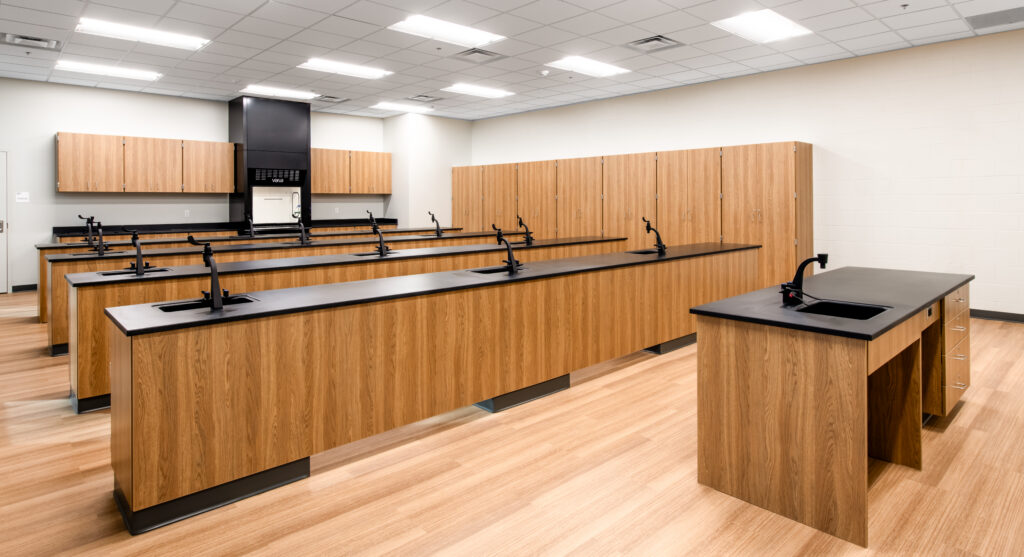
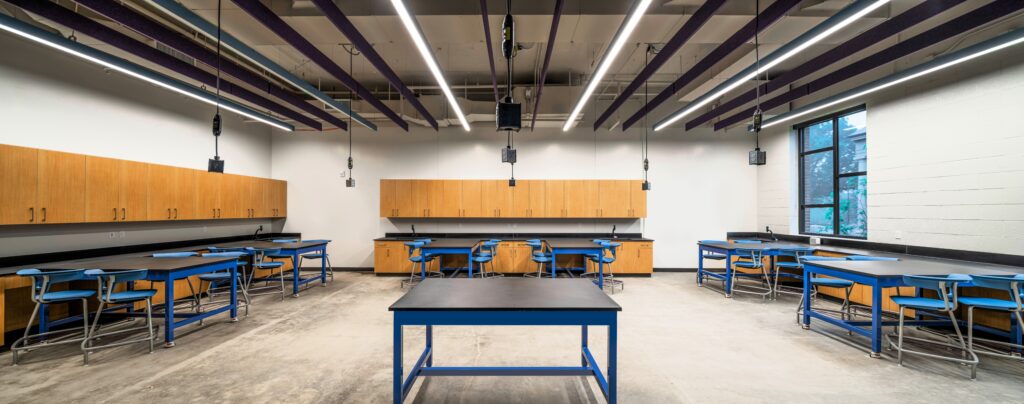
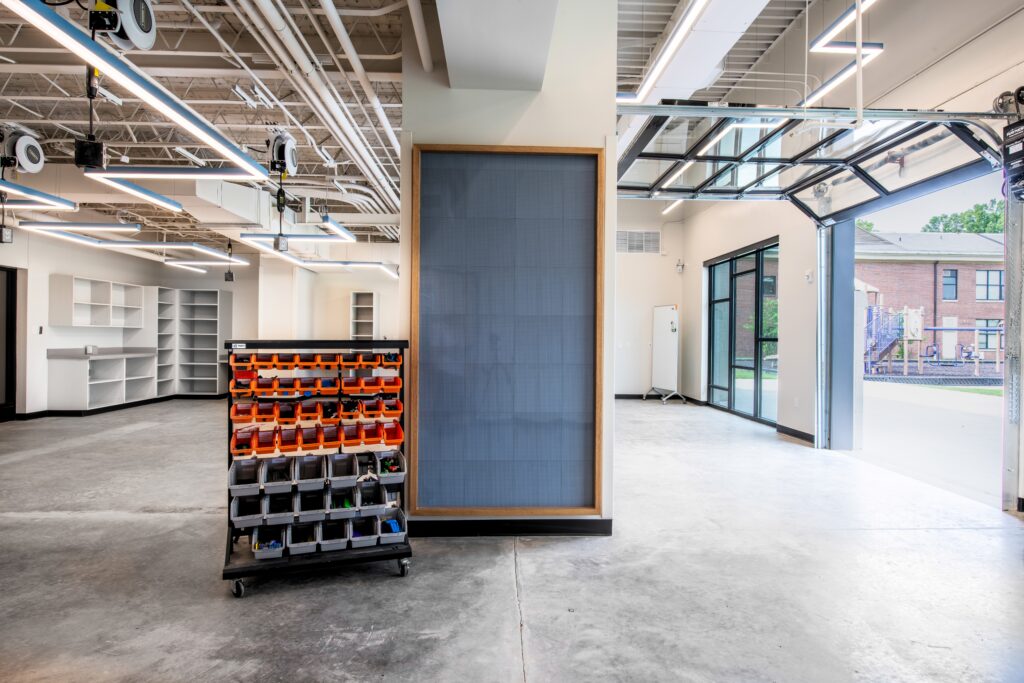
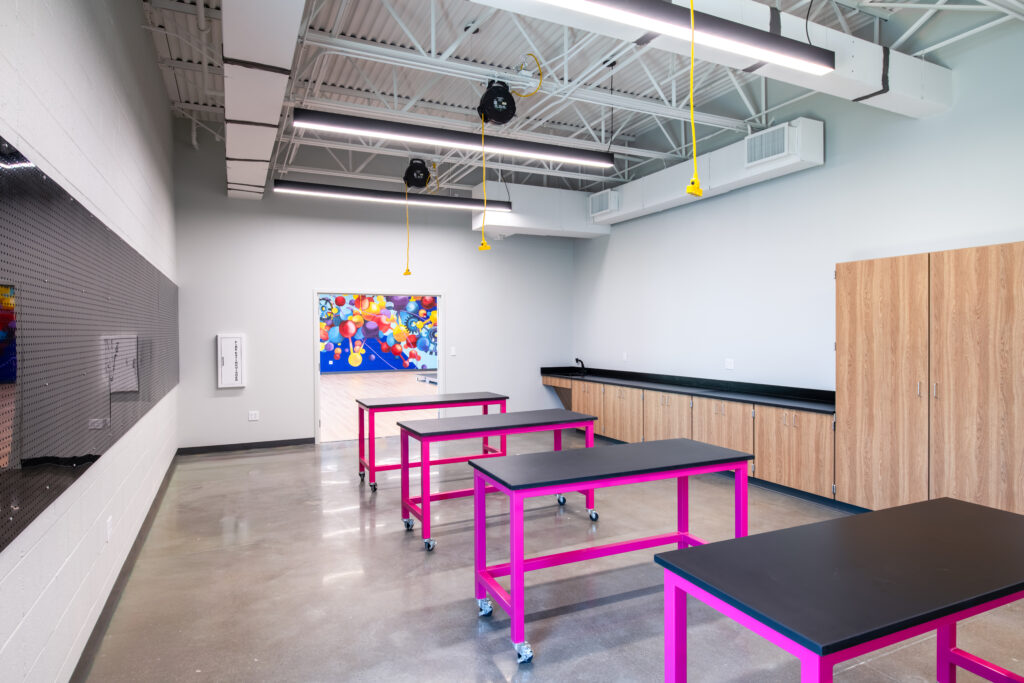
Varia recently designed and installed STEM labs at Whitehaven High School’s Herbert-STEM Center and St. Agnes’ Center for Excellence in Math and Science in Memphis, TN. Lab-grade casework offers ample storage for these science rooms, and trust us, storage never goes out of style. Some classrooms include durable, loose furniture lab tables. These tables can easily be repositioned for a new experiment, a different discipline, or updated technology that the room needs to accommodate.
At St. Agnes, the new science center has enabled faculty to reimagine the STEM curriculum. The Upper School added AP Physics (C). The biomedical curriculum is being redesigned, and additional lab experiences have been added to all the science classes. Educators also plan to use the new Math & Science Center to build on their current robotics extracurricular program, VEX Robotics, by expanding the offering to lower grades. More students are being exposed to in-depth science processes at an earlier age, which builds excitement and proficiency.
In the next 10 years, the current STEM curriculum will be outdated at any school. Planning a lab that can easily be tweaked for future curriculum and new disciplines is essential.