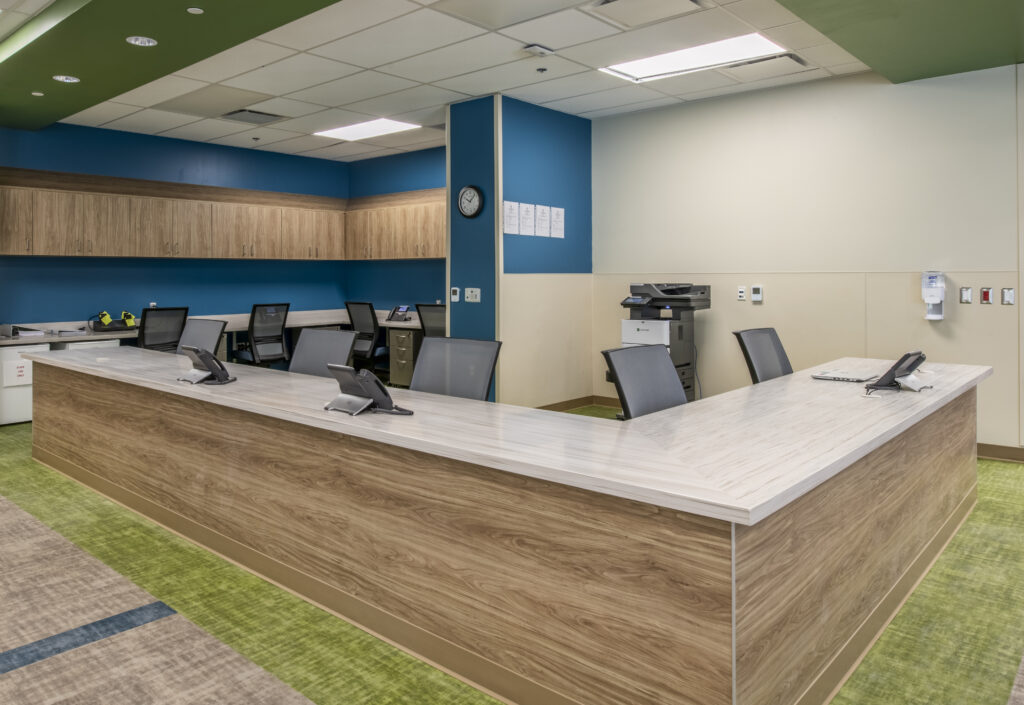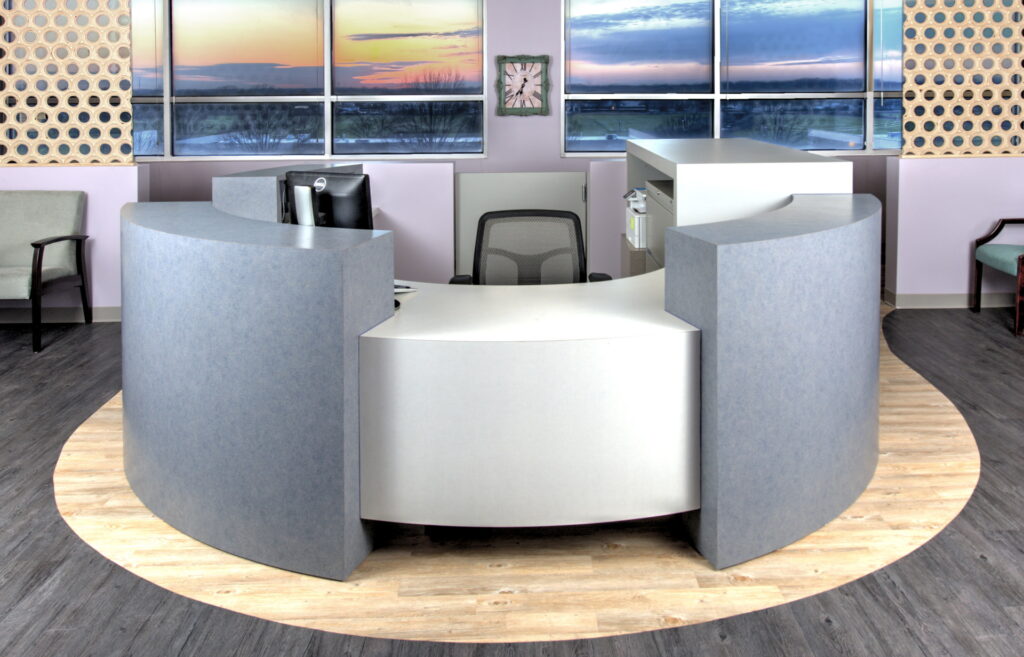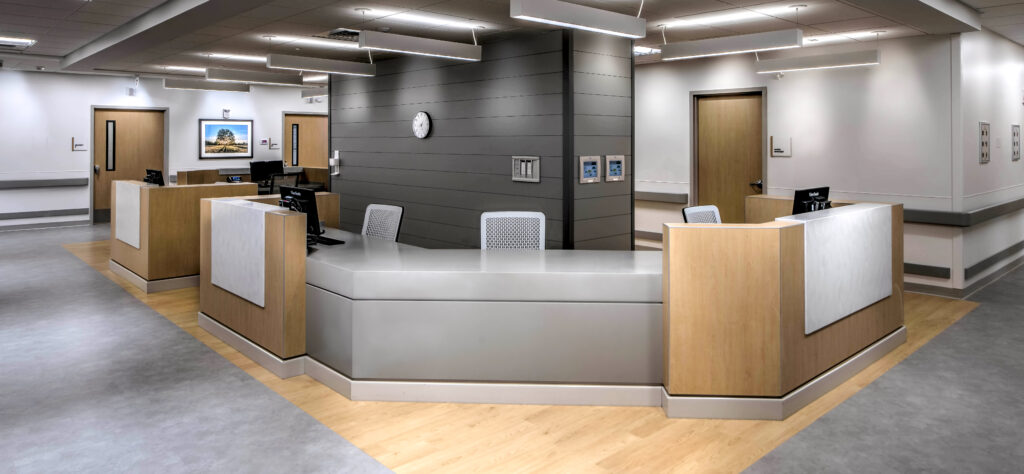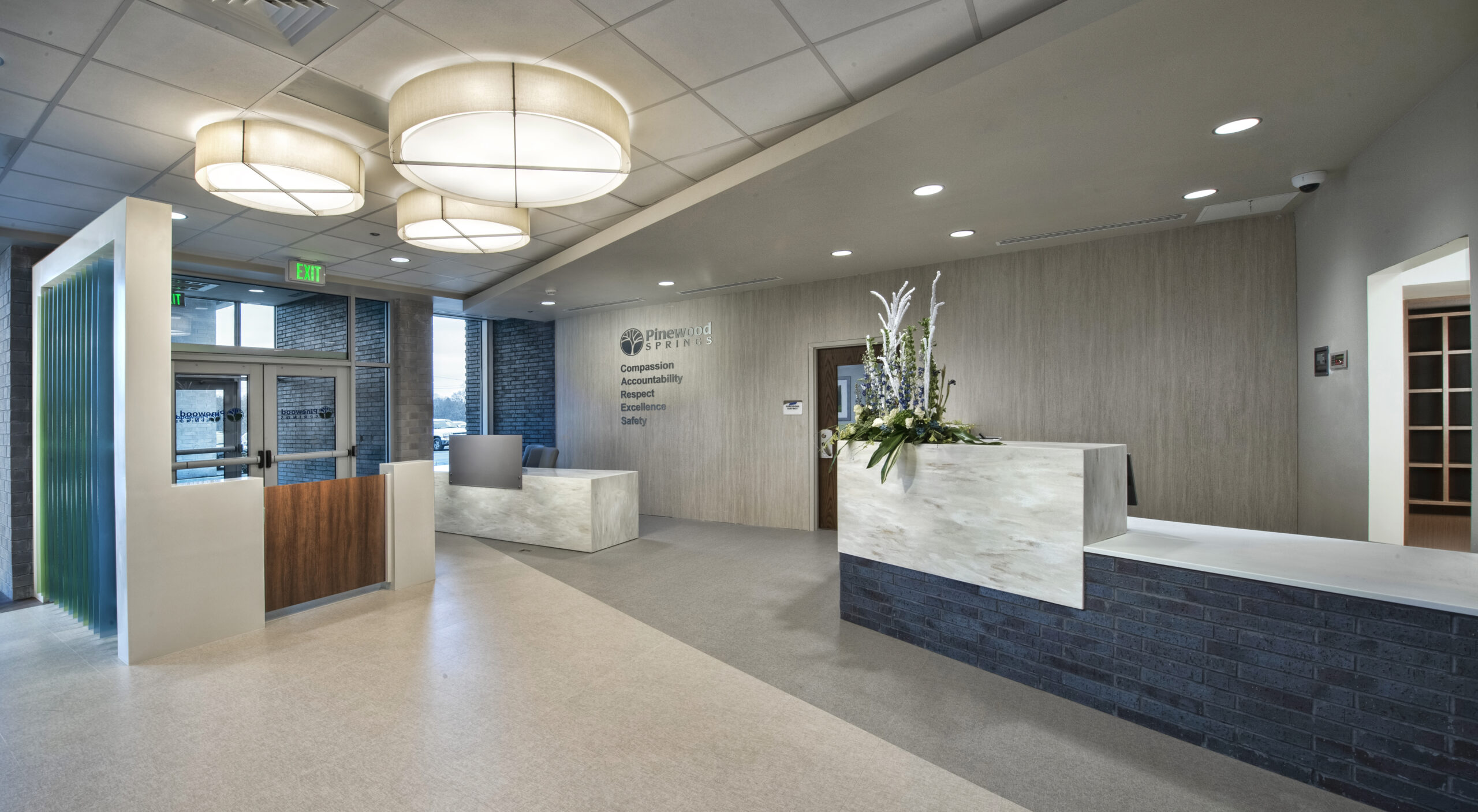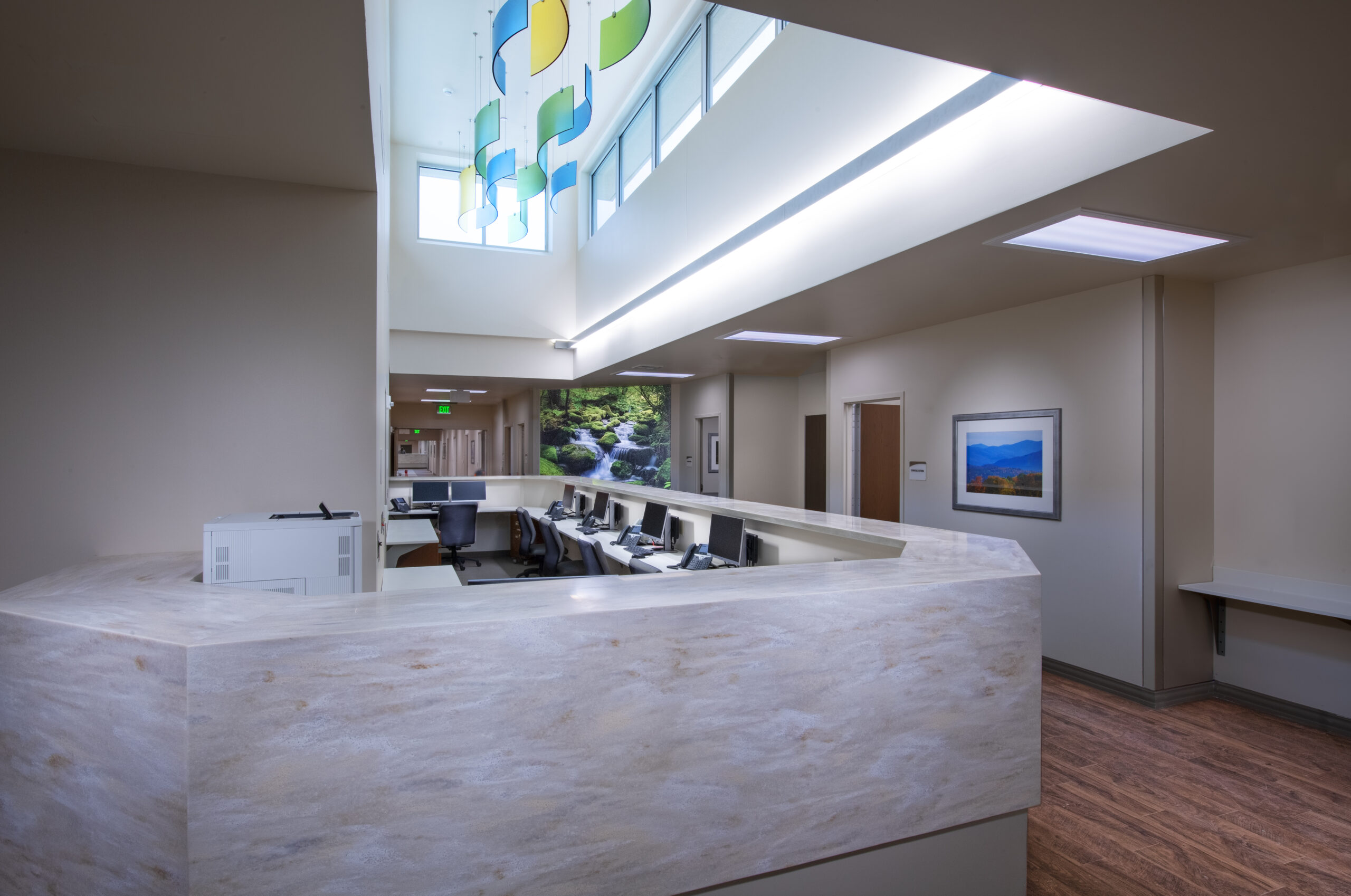
As a casework and millwork company, nurse stations are the heart of our healthcare projects. Often the first impression for patients and other guests, the nurse station meets a variety of practical needs while coordinating with the facility’s aesthetics. Most nurse stations are custom millwork assemblies based on details provided by an architect and/or interior designer, which integrate functional, durable, and design-oriented elements.
Needless to say, nurse stations are more than boxes and tops. The detailed layout and design of a nurse station optimizes workflow and patient/staff safety.
Cleanability and durability are vital components of any casework product in the healthcare setting. Plastic laminate or solid surface countertops are most commonly installed in the nurse station, as these surfaces are non-porous and withstand heavy, around-the-clock use. The nurse station ledge also demands a strong, easy to sterilize product, as it serves a dual purpose as a writing surface for hospital staff and a barrier separating the public area from the work area.
Every healthcare facility has unique needs, which makes customization an important aspect of the nurse station. Although modular designs allow for easy installation and reconfiguration, they typically lack the strength, customization, or durability characteristic of a standard nurse station. Nurse stations can be customized with a wide range of materials, reveals, shapes, sizes, tack boards, file cabinets, and specialized lighting and wiring. These customizations are especially important for hospital staff to stay organized, monitor vital signs, and maintain visual access to patient rooms.
The nurse station, a hub for the healthcare team, serves a crucial role in the hospital setting. When this piece of millwork is properly designed, fabricated, and installed, staff can efficiently complete tasks and effectively care for patients.