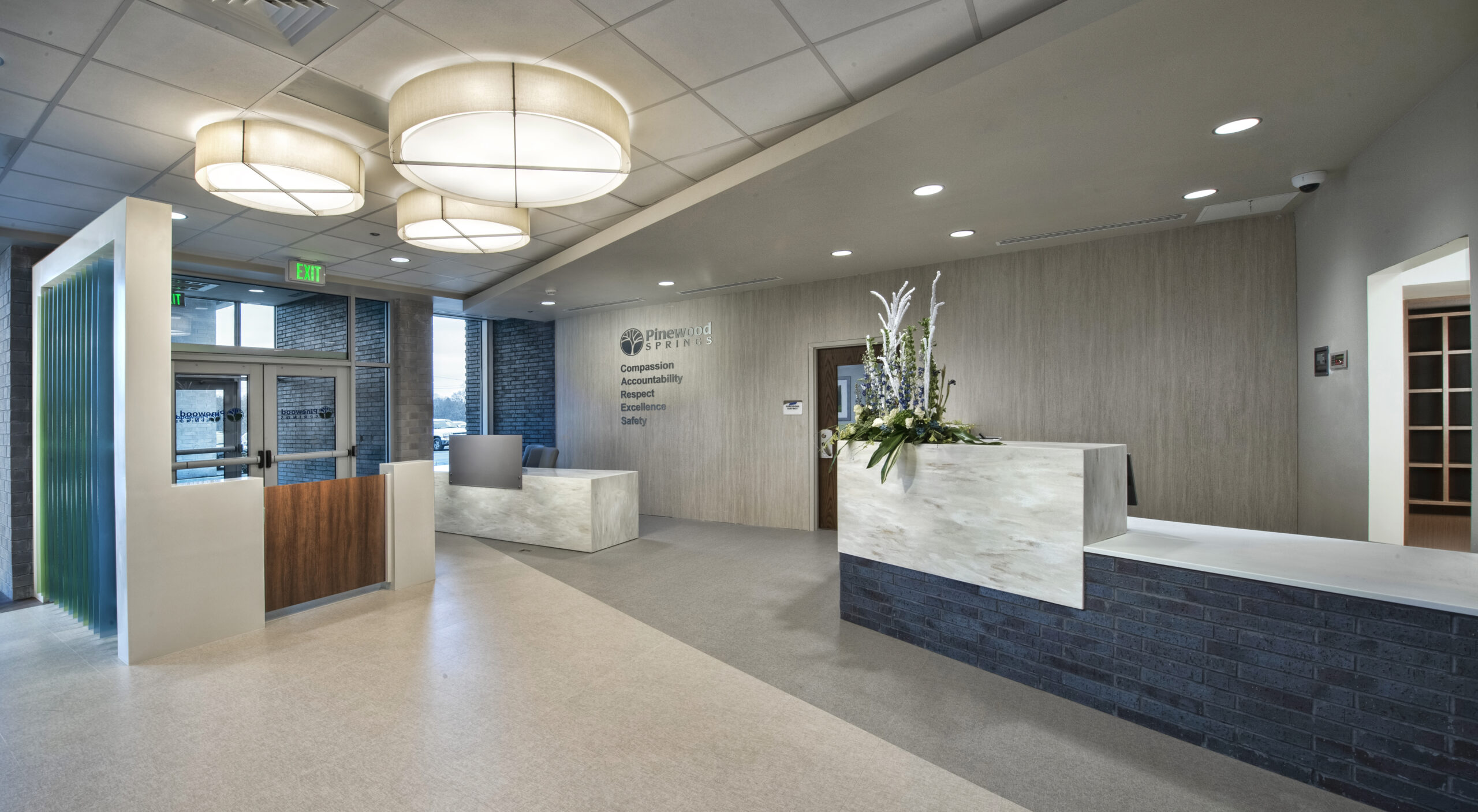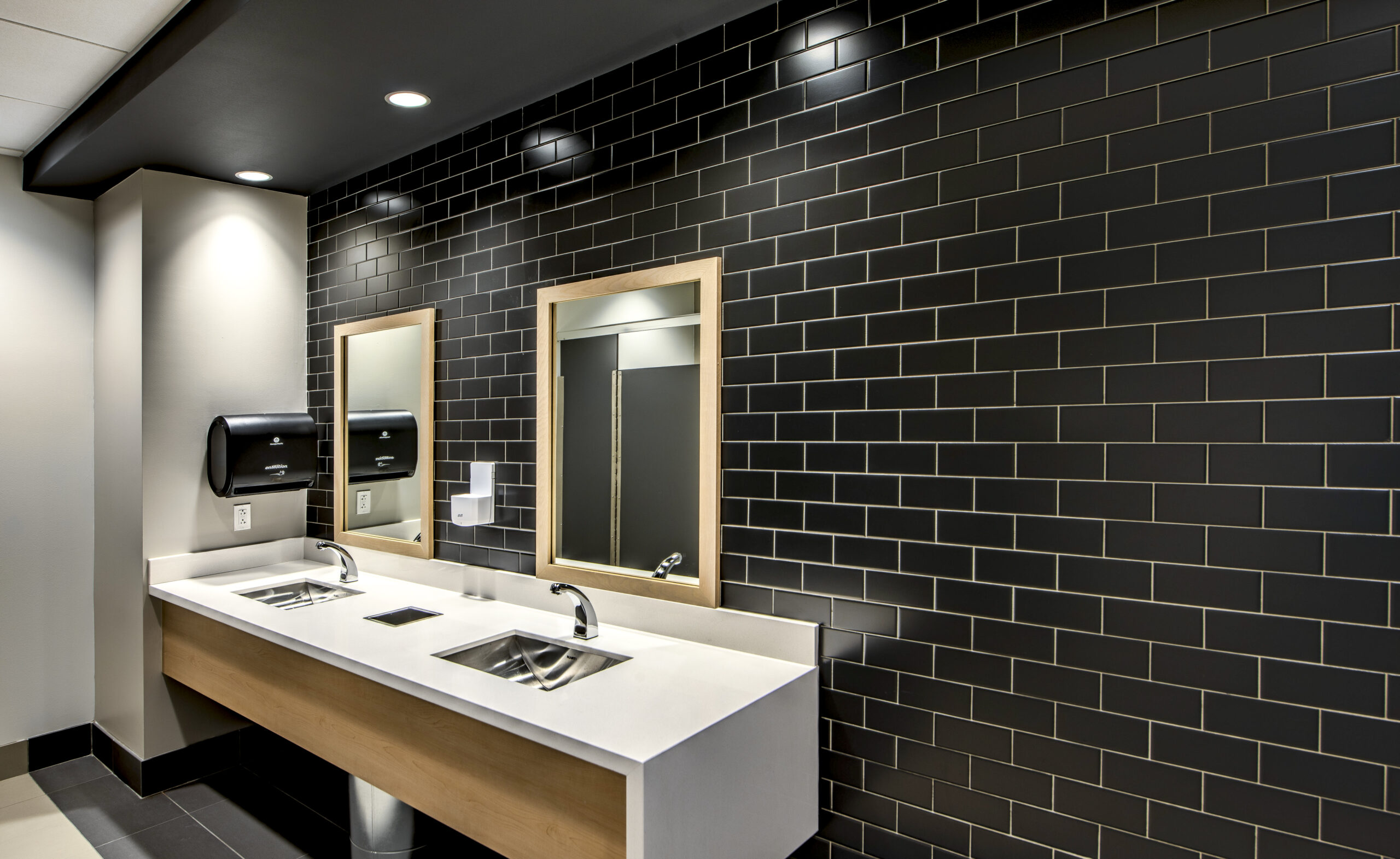
Looking for an upgrade to plastic laminate countertops? How about granite, quartz, or solid surface?
Granite offers unique natural beauty, but it’s porous and needs sealing, which makes it impractical for institutional use. Quartz offers the appearance of stone with added durability, stain resistance, and minimal maintenance requirements. The most affordable upgrade is solid surface, which offers seamless integration, easy repairability (sanding out scratches), and thermo-forming, but that also means it is less heat-resistant than granite or quartz. Solid surface is a softer material that can show wear over time, but it excels in wet areas, such as restroom vanities. Solid surface also has the option of integral solid surface sinks, which takes the seamless look to the next level. You can use standard wood-cutting tools to work with solid surface countertops; however, granite and quartz require stone cutting tools, making field modifications more difficult.
Which one is better for your application? Contact Varia for an expert opinion and application analysis.
Quick Comparison
- Maintenance: Solid Surface
- Durability: Quartz (Solid Surface does scratch/dent more easily, but it is repairable/sandable)
- Heat: Granite (Quartz heat resistance varies by product; Solid Surface is only moderately heat-resistant)
- Infection Control: Solid Surface (non-porous and holds up to harsh cleaning chemicals)
- Budget: Solid Surface (many price ranges to choose from)
- Aesthetics: Granite (unique natural), Quartz (stone-like but engineered), Solid Surface (uniform, seamless)
Samples are available. Testing is recommended before making a final selection. Performance can vary.